I, Accompany
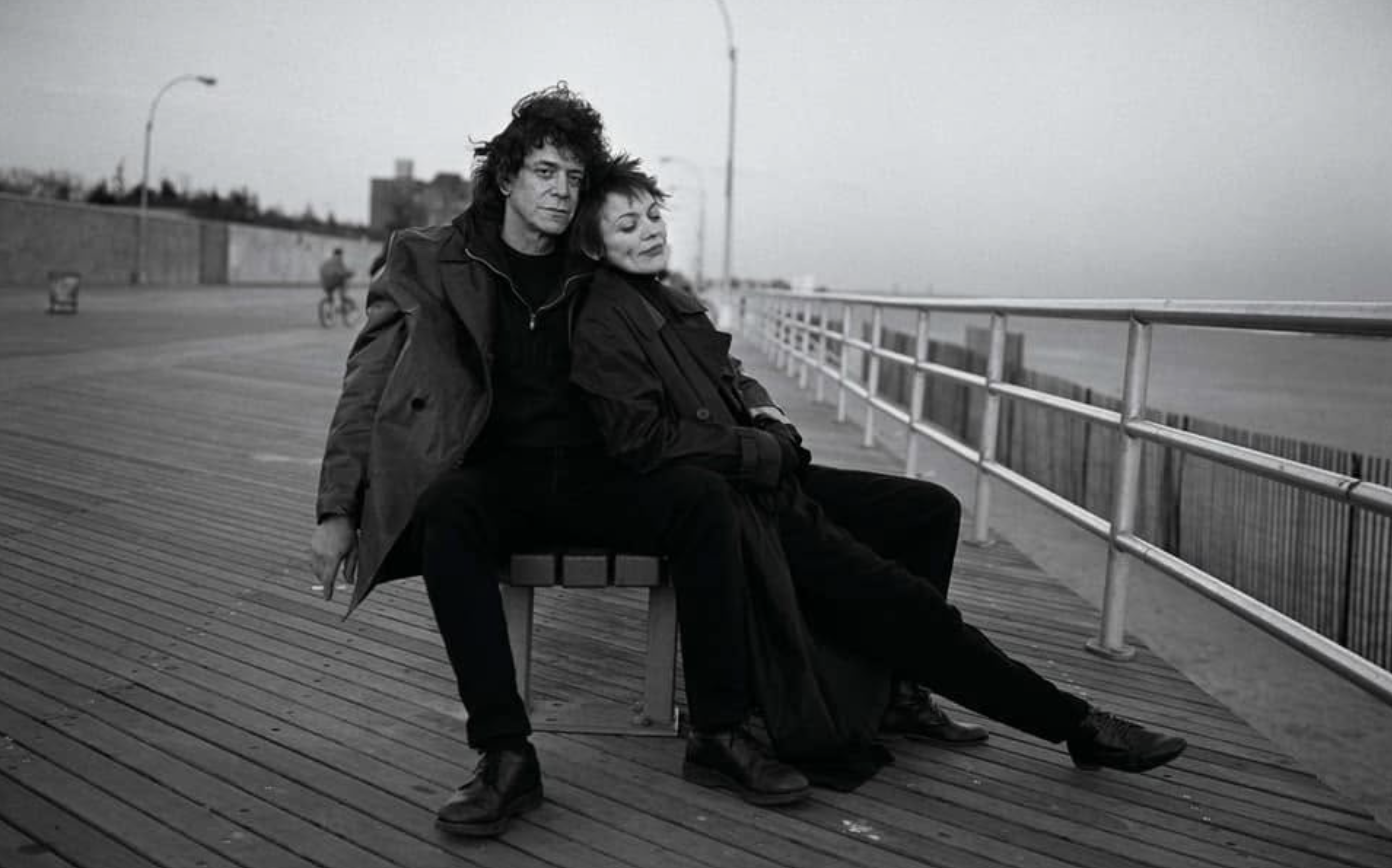
I had gotten to walk with him to the end of the world.
This has been the piece that has taken the longest to write, the most requested by people that know me, and the most challenging. I don’t actually know why; I’m not scared by death, far from it, I’ve studied it for quite some years now, but still, the topic brings a lump to my throat. I’m 63 and Jim is 78 and so it is edging closer to us, to our lives, and I accept that, as does he. But still, it’s weird.
I want to start here, with poet and musician Laurie Anderson’s eulogy to her partner of over 21 years, the musician Lou Reed.
Lou was sick for the last couple of years, first from treatments of interferon, a vile but sometimes effective series of injections that treats hepatitis C and comes with lots of nasty side effects. Then he developed liver cancer, topped off with advancing diabetes. We got good at hospitals. He learned everything about the diseases, and treatments. He kept doing tai chi every day for two hours, plus photography, books, recordings, his radio show with Hal Willner and many other projects. He loved his friends, and called, texted, e-mailed when he couldn’t be with them. We tried to understand and apply things our teacher Mingyur Rinpoche said – especially hard ones like, “You need to try to master the ability to feel sad without actually being sad.”
Last spring, at the last minute, he received a liver transplant, which seemed to work perfectly, and he almost instantly regained his health and energy. Then that, too, began to fail, and there was no way out. But when the doctor said, “That’s it. We have no more options,” the only part of that Lou heard was “options” – he didn’t give up until the last half-hour of his life, when he suddenly accepted it – all at once and completely. We were at home – I’d gotten him out of the hospital a few days before – and even though he was extremely weak, he insisted on going out into the bright morning light.
As meditators, we had prepared for this – how to move the energy up from the belly and into the heart and out through the head. I have never seen an expression as full of wonder as Lou’s as he died. His hands were doing the water-flowing 21-form of tai chi. His eyes were wide open. I was holding in my arms the person I loved the most in the world, and talking to him as he died. His heart stopped. He wasn’t afraid. I had gotten to walk with him to the end of the world. Life – so beautiful, painful and dazzling – does not get better than that. And death? I believe that the purpose of death is the release of love.
At the moment, I have only the greatest happiness and I am so proud of the way he lived and died, of his incredible power and grace.
I had gotten to walk with him to the end of the world. That line will never ever leave me.
San Francisco, 2014.
For what felt like several hours we simply told stories.
Something remarkable happened inside that small foamcore circular room. People who had worked beside one another for years began speaking about experiences they had never previously shared. A father who had died too young. A grandmother whose final weeks had been unexpectedly beautiful. A marriage transformed by illness. A funeral that somehow became an affirmation rather than a farewell. Every story seemed to grant permission for another. The room gradually filled with something that is difficult to describe but impossible to forget. It was not sorrow. There were tears, certainly, but there was laughter too, and long stretches of silence that felt completely natural. We were no longer discussing death. We were talking about love stripped of distraction. Mortality had quietly removed everything ornamental until only what mattered remained.
At one point we were each asked to imagine our own funeral.
The exercise could easily have become sentimental or theatrical. Instead, it revealed something unexpectedly practical. We did not begin by describing coffins or ceremonies. We described places. Music. Light. Smells. The people we hoped would be nearby. The conversations we wished we had not left until too late. When my turn came, I found myself speaking about the far north, about cold air filling my lungs, about the Northern Lights moving silently above an empty landscape. I imagined standing beneath an immense sky where there was almost nothing except weather and light. Looking back now, I realise I was not really describing death. I was describing belonging. I wanted my final experience of the world to resemble the way I had always tried to move through it, with curiosity, attention and a sense of wonder rather than fear.
For years afterwards I continued using the phrase “designing death.” It served its purpose because it invited people into conversations they might otherwise have avoided. Yet the older I have become, the less comfortable I feel with those words. They feel arrogant. They imply a degree of authorship that life rarely grants us. None of us designs the sea. Sailors may study tides, understand winds and build extraordinary vessels, but the ocean remains gloriously indifferent to human plans. The best navigators are not those who control the weather. They are those who learn how to travel through it with humility.
I think the same is true of mortality. We cannot design death. We can, however, shape the experience that surrounds it. We can decide whether difficult conversations happen early enough for honesty to find its place beside hope. We can create rooms that feel less institutional and more like home. We can remember that family members need comfortable chairs as much as patients need comfortable beds. We can allow music, photographs, favourite meals and familiar smells to remain part of the landscape. We can teach ourselves that beauty is not an indulgence reserved for the healthy. It belongs equally to those approaching the final threshold because beauty has never been about decoration. It is one of the ways we remind one another that every human life possesses inherent dignity.
It contains no promise of saviorism, of rescue. It makes no claim to certainty. It does not pretend that another person’s suffering can be solved if only we are clever enough or determined enough. To accompany someone is simply to refuse to let them walk alone. The word comes from the sharing of bread, from companionship rooted in ordinary acts of nourishment and presence. It asks almost nothing of us except attention. Stay. Listen. Notice. Walk beside me for as long as the road continues.
For me, it did not arrive with any theatrical flourish. There was no cinematic moment in which time seemed to stop or the world suddenly sharpened into impossible clarity. If anything, what I remember about my own near death experience the most is how astonishingly ordinary it all felt. One moment I was living inside the familiar momentum of everyday life, believing that tomorrow would resemble today in all the reassuring ways that ordinary days generally do. The next, I found myself in a hospital bed listening to doctors discuss my own heart with the calm precision they had once used to describe other people’s. It is a profoundly disorientating experience to become the subject of conversations you have spent years observing from the outside.
People often ask whether an encounter like that changes you overnight.
I don’t think it does.
Transformation is rarely as dramatic as we imagine. It behaves more like the tide than the lightning strike. Something shifts beneath the surface and then, over weeks and months, entirely familiar landscapes begin to reveal themselves differently. Colours appear a little richer. Morning light lingers a little longer. Conversations become less hurried because you begin to understand, not intellectually but viscerally, that every conversation is finite. Mortality does not necessarily make life more dramatic. It makes it more detailed.
I have become increasingly aware of how often I mistake urgency for importance. Modern life encourages that confusion. We race from one obligation to the next, measuring our days by productivity, efficiency and accomplishment. We congratulate ourselves for being busy, as though exhaustion were evidence of a meaningful existence. Yet lying in a hospital bed, attached to monitors that translated my heartbeat into patterns of light, I realised that almost none of the things I had worried about in the preceding months had accompanied me there. Deadlines remained in offices. Emails continued arriving without me. Meetings found other participants. The world, rather wonderfully, carried on.
What remained were people. Jim waiting anxiously, in another country, alone, scared, hoping for any sign of life from me. Friends whose messages contained no advice, only affection.Doctors whose confidence was matched by an unexpected gentleness. Nurses who somehow understood that reassurance often arrived not through words but through the way they adjusted a pillow or paused for a few extra moments before leaving the room.
I found myself noticing hands.
Perhaps because so much of care is communicated through them. The hand that checks your pulse. The hand that steadies your shoulder as you stand. The hand that reaches instinctively for yours before either of you has decided it should. We speak endlessly about medical technology, and rightly so. It has extended and improved countless lives, including my own. Yet alongside every extraordinary machine stands another human being whose greatest instrument remains simple attention. Medicine may repair the body, but attention reminds us that we are more than bodies.
During those days I thought often about BJ
I remembered our conversations about beauty as a choice in end of life hospice life. About the smell of baking cookies, and how even people who could not eat were comforted by the smell. About open windows, birdsong and afternoon light. I remembered his insistence that aesthetics are not decorative luxuries but essential dimensions of care. Looking around the room, I realised how profoundly environment shapes emotion. A window became more than glass. It became a reminder that life still existed beyond the walls. The changing angle of sunlight across the floor quietly reassured me that time was continuing its ancient rhythm. Morning gave way to afternoon, afternoon to evening, regardless of what happened inside the room. The world remained astonishingly faithful to itself.
That constancy was deeply comforting.
I also found myself thinking about my father with a tenderness that surprised me. Until then I had spent years trying to understand his final decision intellectually. Lying there, listening to the soft sounds of hospital life unfolding around me, I began to understand it physically. Illness has a way of rearranging identity. You become known by room numbers, wristbands and test results. People discuss your body in the third person while you lie only a few feet away. It is nobody’s fault. It is simply the language medicine requires. Yet somewhere inside every patient there remains a person quietly trying to remember themselves. A father. A daughter. A musician. A teacher. Someone who once danced in kitchens, planted tomatoes, laughed too loudly at inappropriate moments or knew exactly how to repair a broken hinge.
My father’s request suddenly felt less like refusal and more like preservation.He wanted to remain himself in my memory. How extraordinary that this should matter so deeply. And yet it does.
Perhaps because we all understand, somewhere beneath language, that memory is the final home we build for one another. Long after voices fade and photographs curl at the edges, we continue carrying people inside us. They become part of our own internal landscape, shaping the way we think, love, choose and remember. We inherit not only their features and habits but their gestures, their phrases, their ways of looking at the world. In that sense, nobody disappears completely. They simply become less visible and more deeply woven into who we are.
My own encounter with mortality also changed the way I thought about the future.
Like many people, I have become fascinated by longevity. Over the past few years I have worn devices that monitor my sleep, tracked my glucose in real time, studied my blood markers, exercised more carefully and paid closer attention to nutrition than I ever imagined I would. Advances in medicine, genetics and artificial intelligence are opening possibilities that would have sounded like science fiction only a decade ago. We are learning to understand ageing with astonishing sophistication. We speak enthusiastically about extending healthspan, slowing biological decline and giving ourselves more years in which to remain active, curious and engaged. I welcome all of that.I do a lot of work in this space and can speak to it from a deeply personal, and I think pretty authentically vulnerable perspective. I hope to live long enough to watch ideas emerge that none of us can yet imagine.I hope medicine continues extending not simply the length of life but its quality.
Yet I have gradually come to believe that our fascination with longevity has also revealed an unexpected blind spot. We devote enormous intelligence to helping people live longer while often remaining strangely reluctant to discuss how they might leave well. We optimize every measurable aspect of health, yet hesitate to ask where someone would like to spend their final weeks, who they hope might be beside them or what music they would like playing if words eventually become difficult. We have become extraordinarily accomplished at postponing death. We are only just beginning to rediscover the art of accompanying it.
I do not mean that we should become preoccupied with dying. Quite the opposite. The conversations that have mattered most in my life have never been conversations about death. They have always been conversations about living honestly enough that death no longer has to arrive as an interruption. Every discussion about mortality is, in truth, a discussion about values, about relationships and about what deserves our attention while we still possess the astonishing privilege of being here.
As I have looked back over my own life, I have begun to notice that the moments which shaped me most profoundly were never those in which somebody solved my problems. They were the moments in which somebody stayed. My parents, each in their own very different ways. My dear Jim, ploughing through seasons together that neither of us expected to navigate. Friends who arrived without advice. Doctors whose kindness extended beyond diagnosis. Nurses who somehow understood that attention itself could become a form of medicine. BJ, who taught me that a room filled with afternoon light may sometimes offer as much comfort as another intervention. None of them altered the fundamental reality that every human life is finite. They altered the experience of living within that reality.
For years I believed my father’s final gift was teaching me something about death. I see now that I had misunderstood him. He was teaching me something about love.
He never stopped being my father.
Even in the last conversation we would ever have, when illness had narrowed his world almost beyond recognition, he was still trying to protect his youngest child, his only son. He was still thinking more about the memory I would carry than the suffering he was enduring. Looking back now, I realise that love did not retreat as his body weakened. It became more concentrated. Everything unnecessary had fallen away. What remained was the simplest and purest expression of who he had always been.
We spend so much of our lives trying to leave something behind. We build careers, write books, raise children, plant gardens, create companies and worry endlessly about legacy. Yet I have come to suspect that the most enduring thing we ever leave another person is not what we made. It is how we made them feel in our presence. The memory of being accompanied. The sense that, for a while at least, someone walked beside us with generosity, curiosity and love.
I often walk along the coast near our home in Denmark. The weather changes with astonishing speed there. One moment the sea stretches endlessly towards the horizon beneath an open sky. The next, mist arrives almost without warning, drawing a soft veil across the water until boats disappear and only the distant sound of a foghorn suggests that something continues moving beyond sight. I used to find those mornings strangely unsettling. Now I think they are among the most beautiful.
The coastline has become a patient teacher.
Standing there, I realise how little the horizon asks of us. It does not demand certainty. It does not insist that we explain what lies beyond it. It simply invites us to acknowledge that our vision has limits while the world does not. My friend Alice says “Home is the horizon” I love that. There is humility in that recognition. There is also freedom. I no longer feel compelled to decide what waits beyond the mist. I have become content to honour the mystery itself.
Perhaps that is what Laurie Anderson understood when she wrote that she had gotten to walk with Lou Reed to the end of the world. Every time I return to those words, I hear something different. When I first encountered them, I thought they were about death. Now I think they are about companionship. They describe the extraordinary privilege of remaining present when there is nothing left to fix, nowhere left to hurry and no illusion that love can bargain with time. They remind us that walking beside another human being is not a lesser act because it cannot change the destination. It may be the greatest act we are ever asked to perform.
I sometimes think back to that telephone call more than twenty ago. For years it felt unfinished, as though one final conversation had somehow been stolen from us. Time has persuaded me otherwise. The conversation never ended. It simply changed its form. I hear it now in places my father never visited. In the sound of waves arriving before dawn. In winter light moving slowly across the sea. In hospital corridors where strangers sit patiently beside people they love. In the stories friends begin telling when someone finally gives them permission to speak about loss. His voice has become part of the landscape I carry with me, as enduring as the tide or weather.
When I first began thinking about these things, I imagined death as the final design challenge. I understand now that I was looking in the wrong direction. The challenge has never been death itself. It has always been how we care for one another while walking towards it. How we create enough beauty, tenderness and courage that another human being never has to approach the shoreline believing they are alone.
The tide arrives.The tide retreats. The mist gathers and then slowly lifts again.
Somewhere beyond the limits of our sight the sea continues its ancient conversation with the sky, just as it always has. I have stopped searching for certainty there. It is enough to know that, for a little while, we found one another on the shore, walked together as far as we could, and discovered that love does not end where the land does. It simply continues beyond the edge of our seeing, carried forward in the memories we leave one another, like voices travelling across water long after the people who spoke them have disappeared from view.