I, Belong
Keep a little fire burning, however small, however hidden.
Before we belonged to houses, we belonged to fire.
Before there were rooms with doors, streets with names, countries with borders, family tables, front steps, spare keys, favourite chairs, or the predictable domestic theatre of lamps, rugs, cups, blankets, clocks and evening rituals, there must first have been the fire. A small sun brought down to earth. A trembling centre. A circle of heat in the dark. A place where the body loosened, where the eyes adjusted, where fear softened at the edges, where the animal part of us understood that for tonight, at least, we were safe. Before home was architecture, it was atmosphere. Before it was a mortgage, an address, a postcode, a set of keys left in a bowl by the door, it was warmth held in common. A flame, a gathering, a little republic of bodies drawn close. have been thinking a lot about this recently because of Louise.
Louise’s own path to this subject began somewhere much hotter, drier and more solitary than our kitchen in Denmark. It began in the desert, in grief, in that strange scorched clarity that can sometimes come when life has broken open and nothing decorative will do.
Louise writes:
My story begins in Joshua Tree National Park in California, where I had gone in October 2018, following a business trip to LA. My beloved brother Gustaf had just died suddenly, and I was trying to find some meaning in this moment of intense grief. I had been running my company Eldvarm for five years at that point, and while it had some success, I realised that it lacked purpose for me. As I reflected on the fragility of life, alone in the desert, it became very clear that I needed to find my purpose, my why. I decided that either I would build it into my business, or I would let Eldvarm go.
There is something almost ancient in that image. A woman alone in the desert, stripped back by loss, asking not how to grow a business, not how to sell more, not how to polish the surface of things, but what the work is for. Grief has a way of burning away ornament. It leaves the bones. It asks the questions we spend whole years avoiding. What matters now? What remains? What deserves the next part of my life? In Louise’s case, the answer did not come as a brand strategy or a positioning statement. It came, as the old answers often do, through fire.
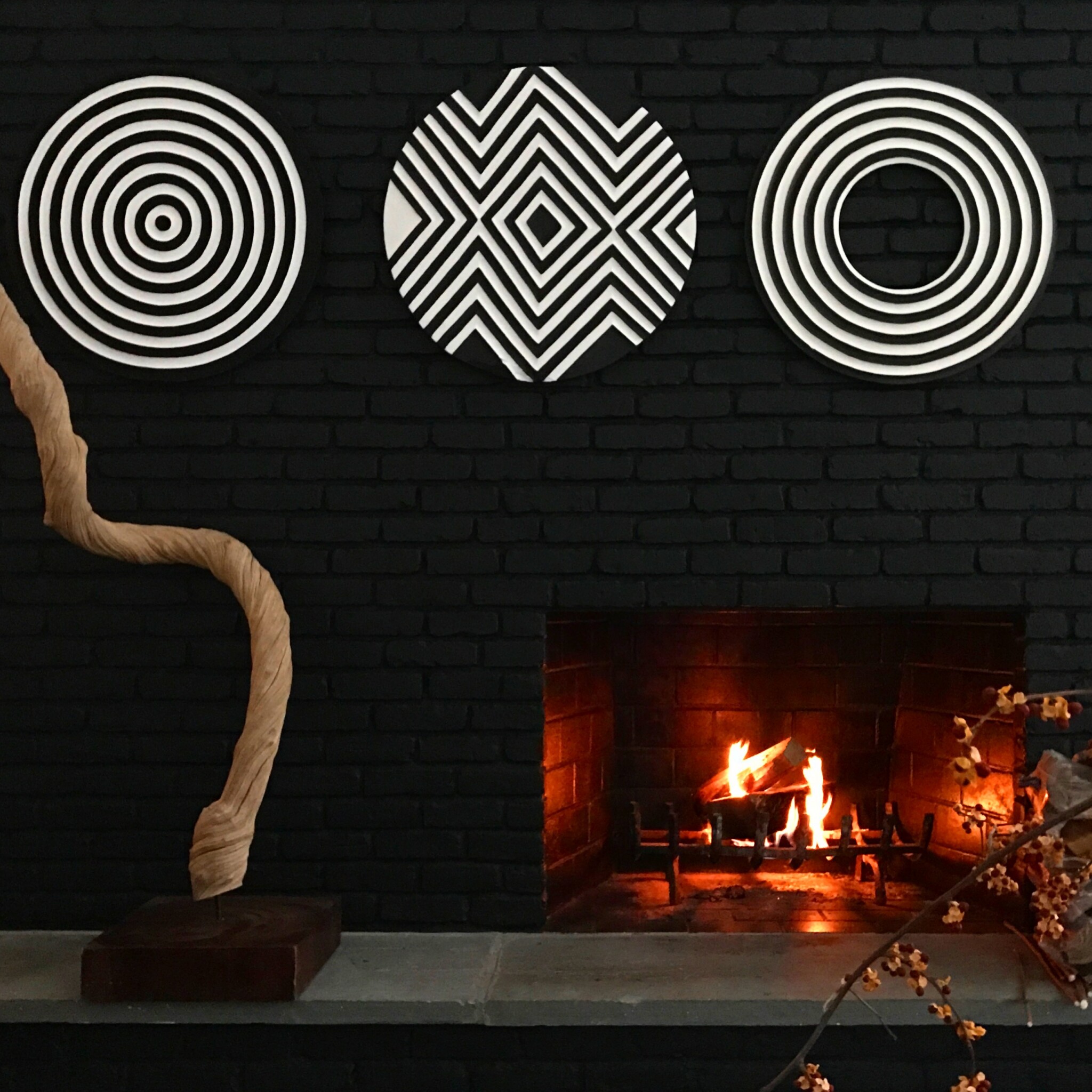
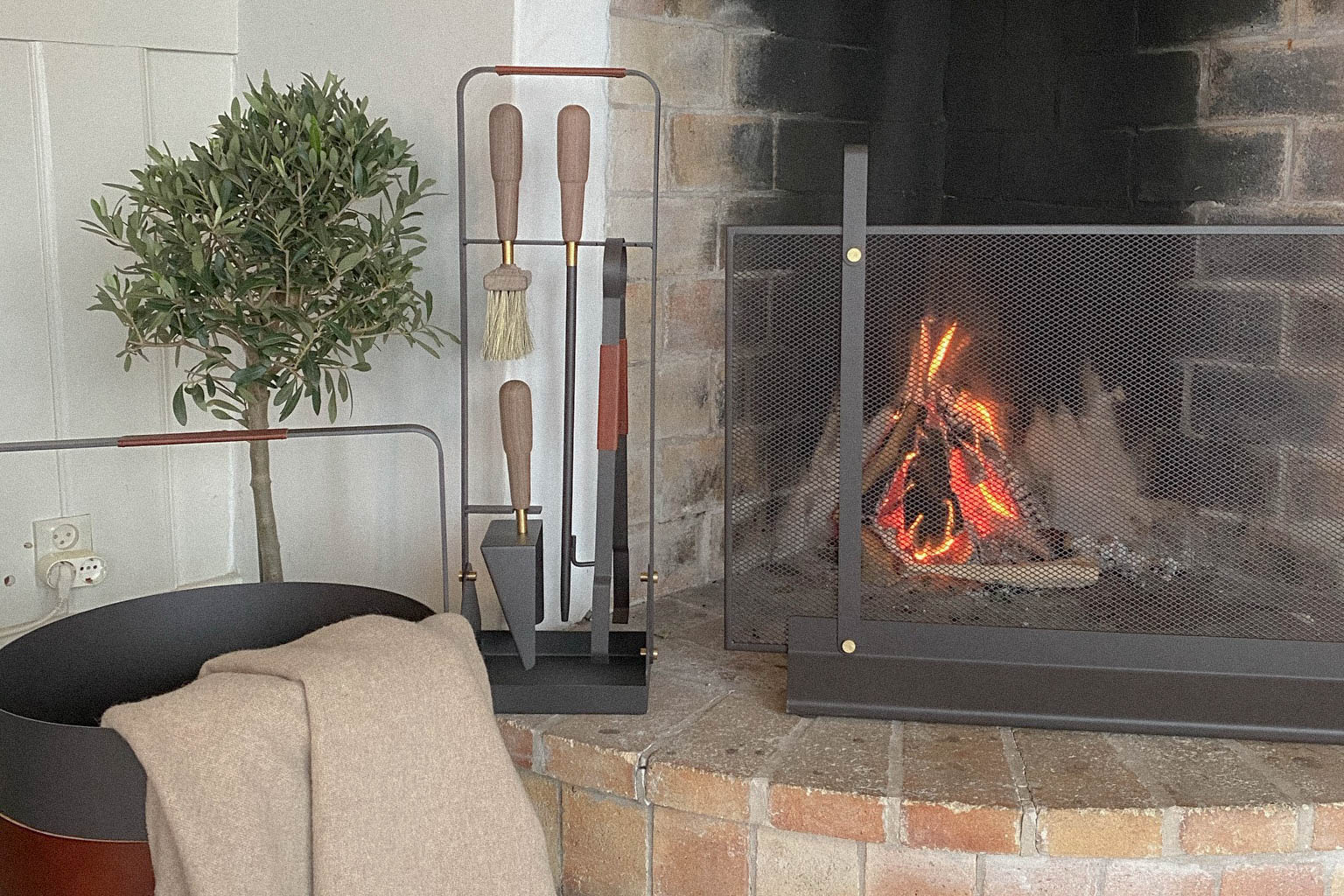
Louise Varre and I first found one another in that strange modern way people do now, through a sequence of signals sent across distance. She had seen my TED talk from 2007, Design is in the Detail, when I was still deep in my IDEO years, trying to explain that the smallest things are rarely small at all. Y ears later, I found her through her company Eldvarm, because I wanted to buy one of her Emma Companion fireplace sets for our house in Iceland, and somehow that simple transaction became a thread. A direct message became a follow. A follow became a conversation. For a while, we were what the internet rather sweetly calls Instagram friends, which is to say people who have not yet met but have already begun to recognize something in each other. There is a curious intimacy in that. Not friendship exactly, not yet, but a kind of distant warmth.The sense that someone’s eye, someone’s hand, someone’s way of arranging the world has begun to matter to you.
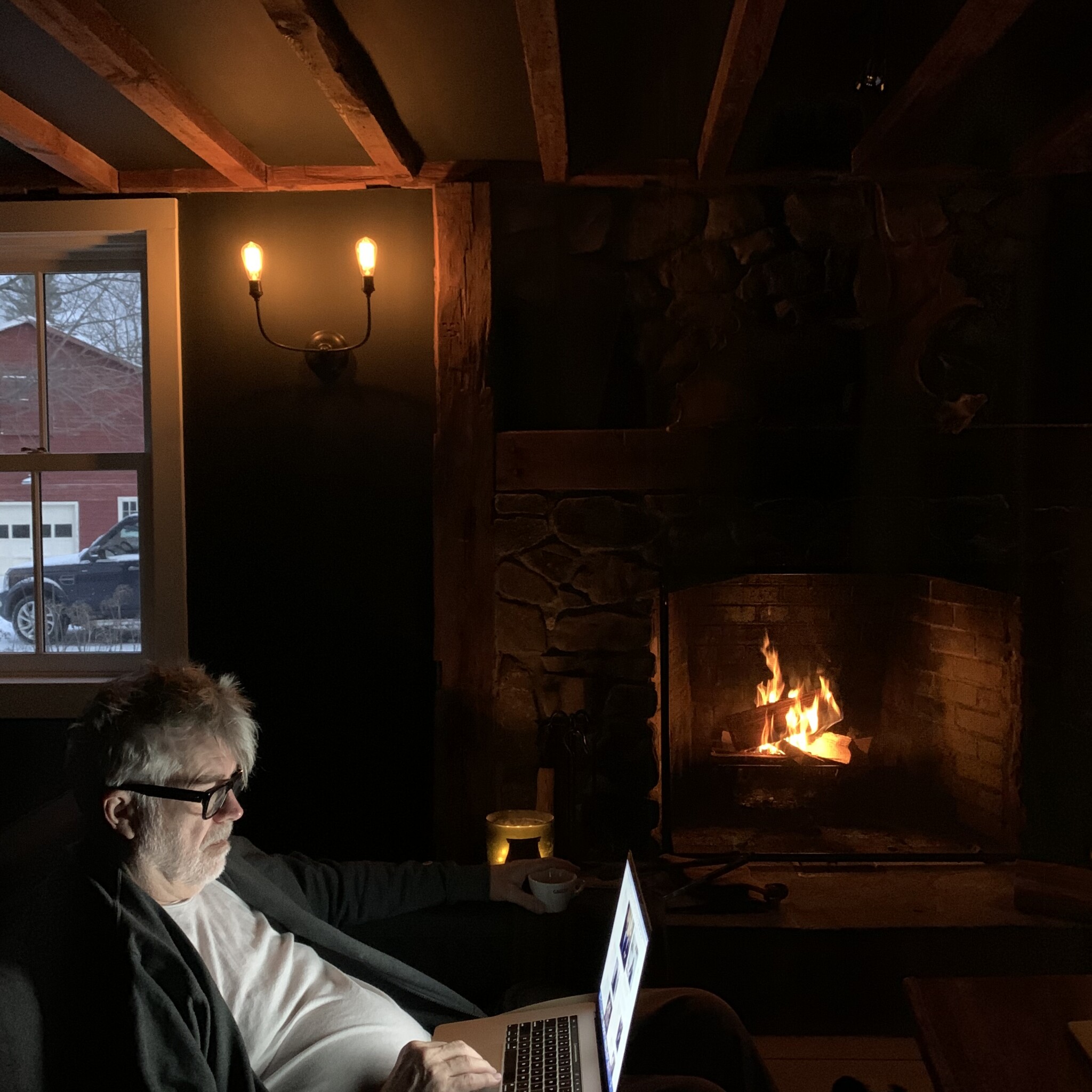
Then I moved to Copenhagen, and the distance between us became practical rather than theoretical. We met for coffee. We talked for hours about design and life, which are really never separate subjects. We talked about objects, rituals, altars, rooms, homes, and the strange emotional intelligence of things. We decided it was time to spend time together, so recently Louise came to stay with Jim and me in our house in Denmark, and the conversation deepened again, as conversations often do when they move from café table to kitchen table, from public chairs to private rooms, from appointment to hospitality. There is a different kind of knowing that happens when someone sees where you live. Not the curated version, though of course there is always a little of that, but the more tender evidence of daily life. The mug you reach for first. The chair that has become yours by repetition. The books that gather beside the bed. The way the light falls in the morning. The place where the cats sleep, often by the fire. Of course we have a fire, a big one, right in the centre of our kitchen. It is why we bought the house, the central part of our home. We cook on it, gather around it, and life operates around it. Because of it, the rest of the house seems to orbit around the kitchen. The rooms begin to speak to one another in hushed terms, all in service of the fire.
Louise and I decided it was time to collaborate on some things, starting with a talk at 3daysofdesign in Copenhagen in June, where we have decided to bear all and speak about belonging and connection, and about what hundreds of thousands of years of evenings by the fire may have built into us. How the fire gathered us before architecture formalized us. How it shifted attention before screens fractured it. How it made a circle of warmth in the dark and taught the human body, long before theory, what it meant to be near. It feels right that this conversation began with design, passed through friendship, and has now arrived at fire. Fire is both the oldest technology and one of the oldest forms of welcome. It is practical, but never only practical. It cooks, heats, protects, illuminates, but it also changes the emotional weather of a room. It brings people down a register. It slows the pulse. It gives the eye somewhere soft to rest.
Louise writes:
I started my search where my deepest interest had always been: the human brain. Since my late teens, I have been reading about our neurology, our physical and emotional wellbeing, and how we as humans interact with the world. I narrowed in on the evolution of the brain and its relationship to the fire. For the last 400,000 years, humans have gathered around the fire every night, and in doing so, our brain evolved to need each other. The fire needed constant tending and fuel, and so we started dividing labour: some hunted, others collected firewood, a few cooked, and so forth. This made us incredibly interdependent, and a strong sense of belonging to the group became our most powerful survival mechanism. This, I think, is the part we forget. We speak about belonging now as if it were a modern psychological preference, a social desire, a softness, a nice-to-have tucked somewhere below productivity and above leisure. But belonging is older and more serious than that. It is not decorative. It is not sentimental. It is biological, architectural, neurological, atmospheric. The body knows when it is alone too long. The nervous system knows when no one is listening for the same sound inthe dark. The ancient brain still scans for the circle, the glow, the others, the shared labour of staying alive.
Louise is a craftsperson. She makes things for fire. Fireplace tools, candles, objects for tending flame and warmth. But that does not do it justice. That is not really what she makes, or not only that. She makes invitations to gather. She makes instruments of return. She makes the things that sit quietly at the edge of a hearth, waiting to be used, waiting to be needed, waiting for someone to come home. A brush, a poker, a log holder, a candle, these are practical objects, of course, but they are also objects of attention. They dignify the act of tending. They say that the care around the fire matters too. The preparation matters. The clearing matters. The small repeated gestures matter. In this way, her work lives in the space between utility and ceremony, which is where so many of the best things in life live. The spoon that stirs the sauce. The knife that has fitted itself to the hand over years. The old linen napkin, softened by washing. The matchbox by the grate. The tool that does its work without asking to be admired, yet becomes beloved because it has been present for so many ordinary evenings. We are talking about belonging. Not belonging as identity, exactly, though it is partly that. Not belonging as ownership, though houses and histories and objects do play their part. We are talking about the more ancient version. Belonging as a primal bodily knowledge. Belonging as warmth. Belonging as the moment the shoulders drop, the voice softens, the room begins to breathe differently, and people who were separate a few minutes before find themselves arranged around the same glow. Belonging is not always a grand declaration. It is often much smaller than that. A chair pulled closer. A blanket offered without fuss. A glass refilled. Someone remembering how you take your coffee.Someone saying, stay a little longer,when the evening might otherwise have ended. It is the absence of self-consciousness. The moment you stop wondering whether you are wanted because the room has already answered.
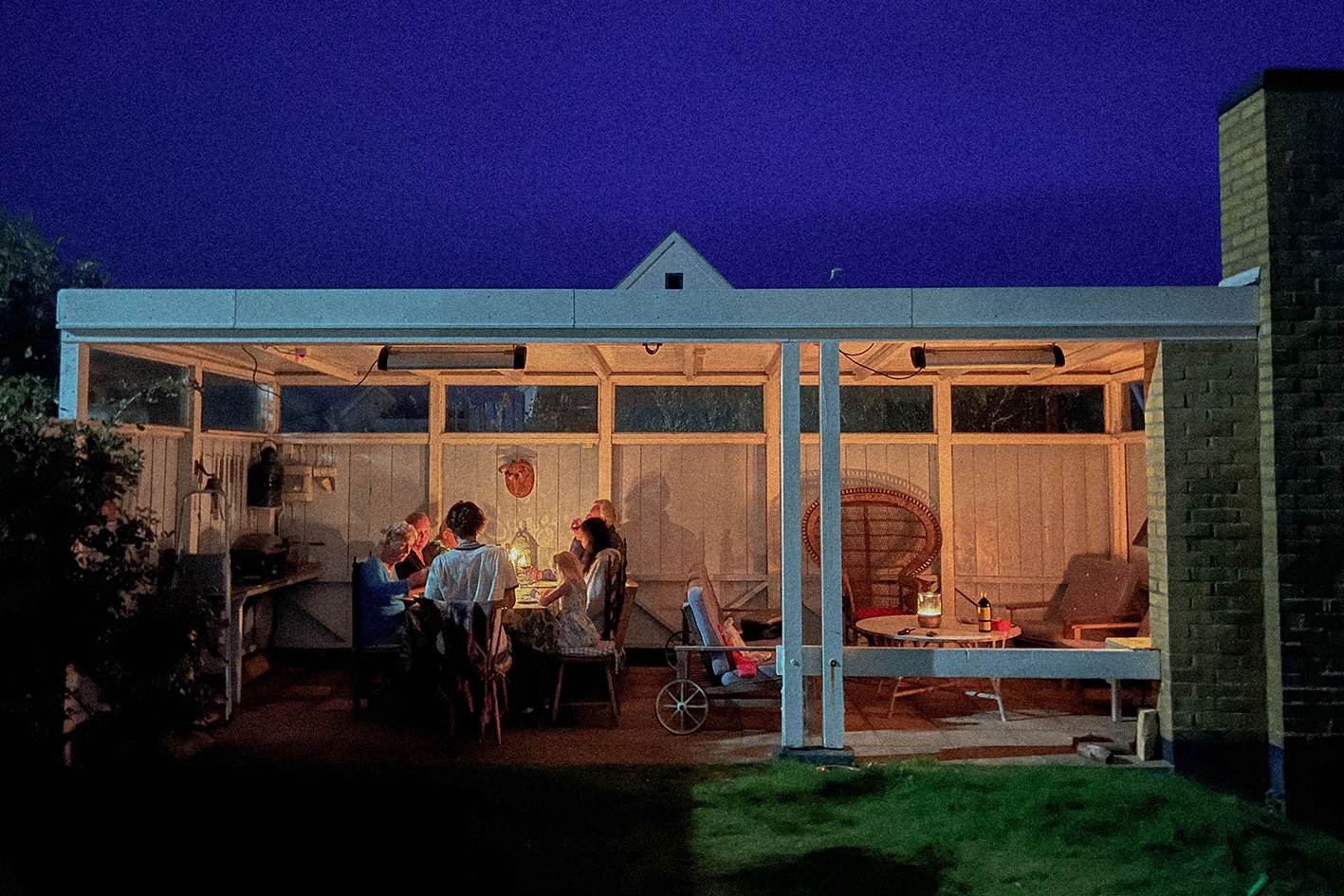
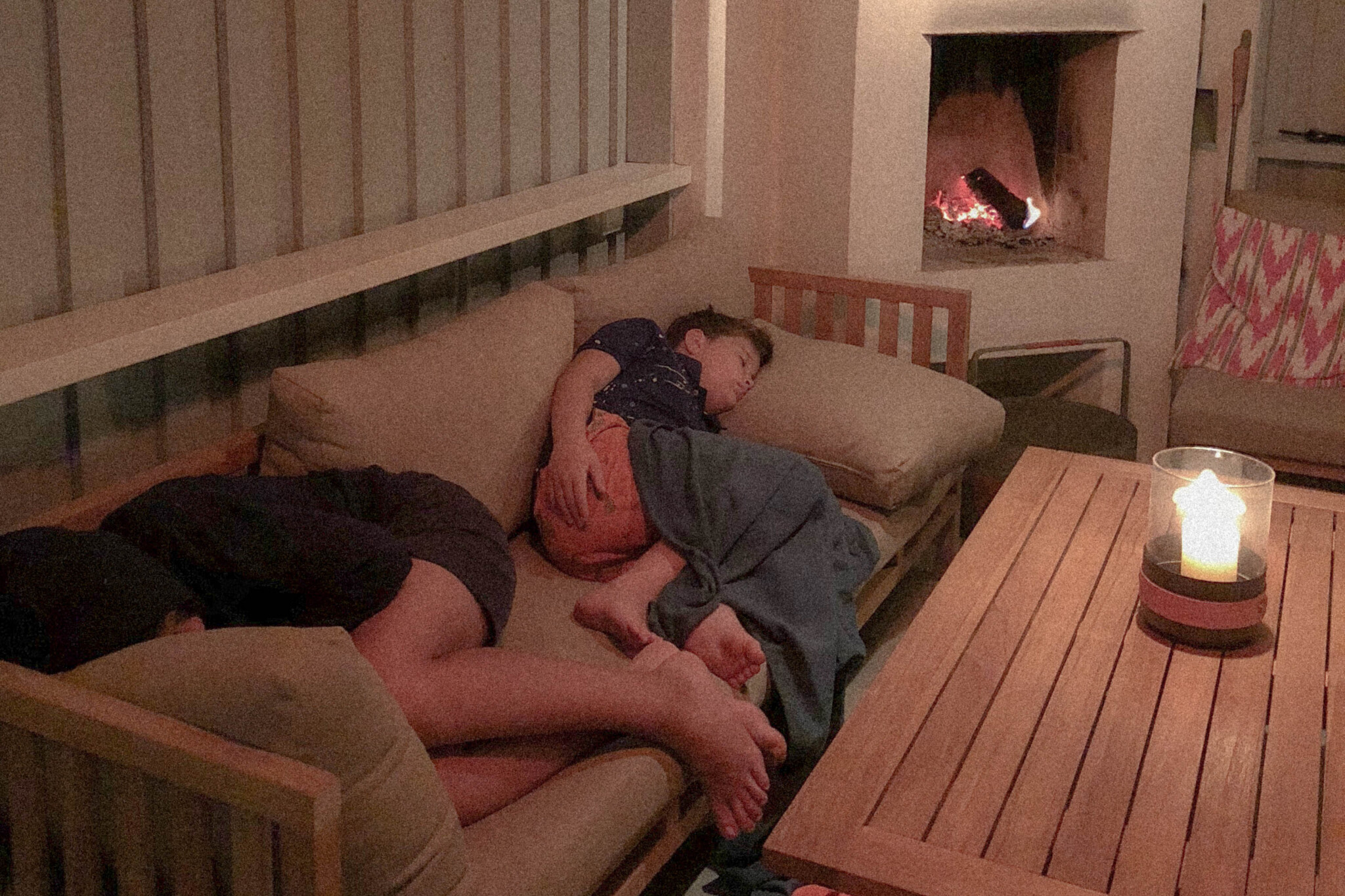
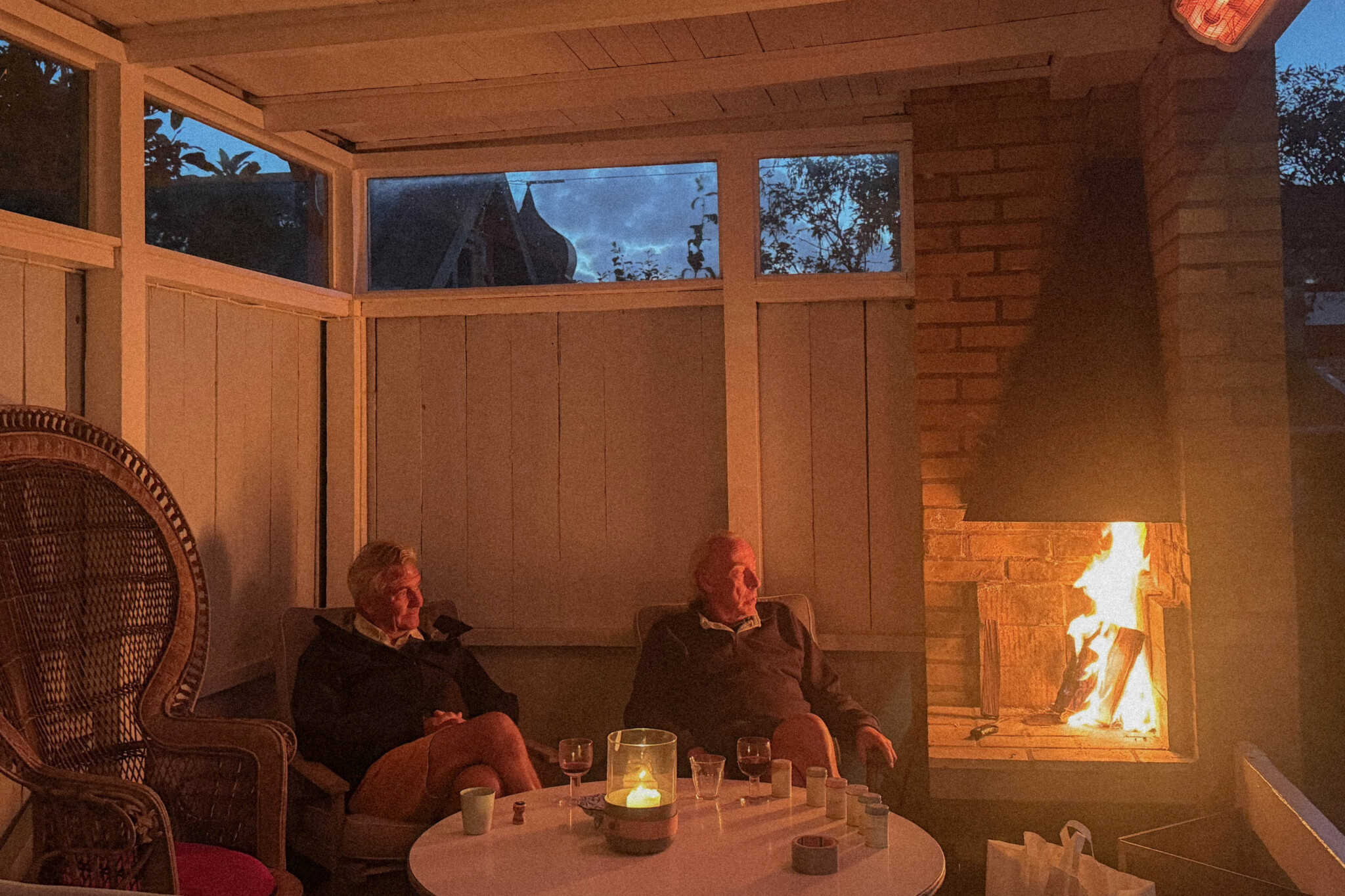
Louise tells me that her idea of the perfect fire began in Torekov, on the Swedish southwest coast, at the family home that has been her one constant place. She has moved between countries all her life, she says, but Torekov remained. A fixed point. A north star. A house, yes, but also something more than a house. A geography of continuity. A place where time did not stand still, but gathered. There is an outdoor room in the garden with a fireplace. Most nights, her family gathers there. When she was small, her grandfather would tend the fire while the adults talked and the children played and, if luck was on their side, fell asleep on the sofa. I can see it as she describes it. The deepening blue of a Scandinavian summer night. The faint salt of the sea in the air. Bare feet. Wool blankets. Glasses on a low table. The adults speaking in that softened register adults use when children are almost asleep but not quite. The fire being fed, stirred, watched, understood.
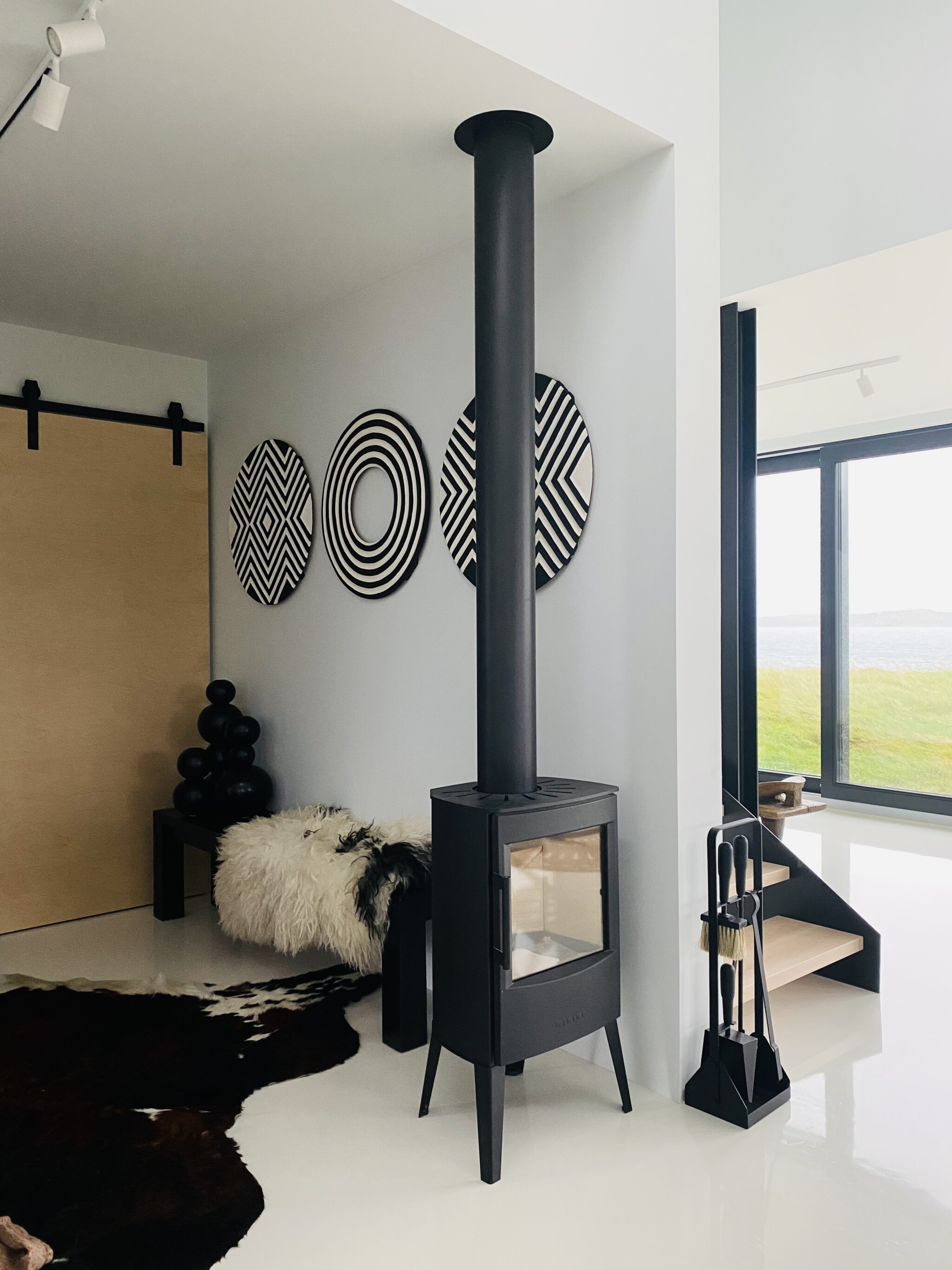
And then the astonishing thing. The same thing still happens now. Louise sits there with her own children, who are young adults. Some of the people who once sat there are gone. The grandfather who tended the fire is no longer tending it. And yet somehow he is. The gesture continues. The room remembers. The flame carries the shape of his hands. This is one of the strange powers of fire. It makes time porous. A table can hold memory. A photograph can hold memory. A house can hold memory. But afire seems to release it. It does not preserve the past in a sealed glass cabinet. It animates it. It lets the dead and the living sit closer together than reason says they should. It turns memory into warmth.
Louise writes:
With the control of fire, the dark hours of the night were no longer about pure survival, and this created a large cultural shift. Now we told stories, sang, danced and shared meals, every activity helping us to co-regulate our nervous systems and deepen our sense of belonging to the group. Together with the warmth of the fire and the flickering flame, these activities soothed us, and our bodies could rest, digest, and regenerate. Our world might look very different today, but our brain is nearly identical. It still reads loneliness as an existential threat, putting the body through immense stress.
I tell Louise that this may be why the hearth has always meant more than heating. It has been the centre of the house because it was once the centre of survival, but survival was never only physical. Y es, the fire cooked the food. Yes, it kept back the cold. Yes, it kept animals away, dried clothes, hardened tools, boiled water, lengthened the day. Butsomething else happened there too. Stories gathered. Songs began. Silences became shareable. Children learned the faces of adults in flickering light. People watched oneanother without the pressure of direct looking. Communities formed not in declarations, but in proximity. Around a dining table, conversation can become a kind of work. There is a place setting, an expectation, a performance of engagement. One must speak, answer, contribute, keep the evening aloft. But by a fire there is another kind of permission. You can sit and look into the flames and no one thinks it strange. You can be with people without having to constantly prove your presence. The fire does some of the social labour for you. It gives everyone something to look at. It makes room for silence.
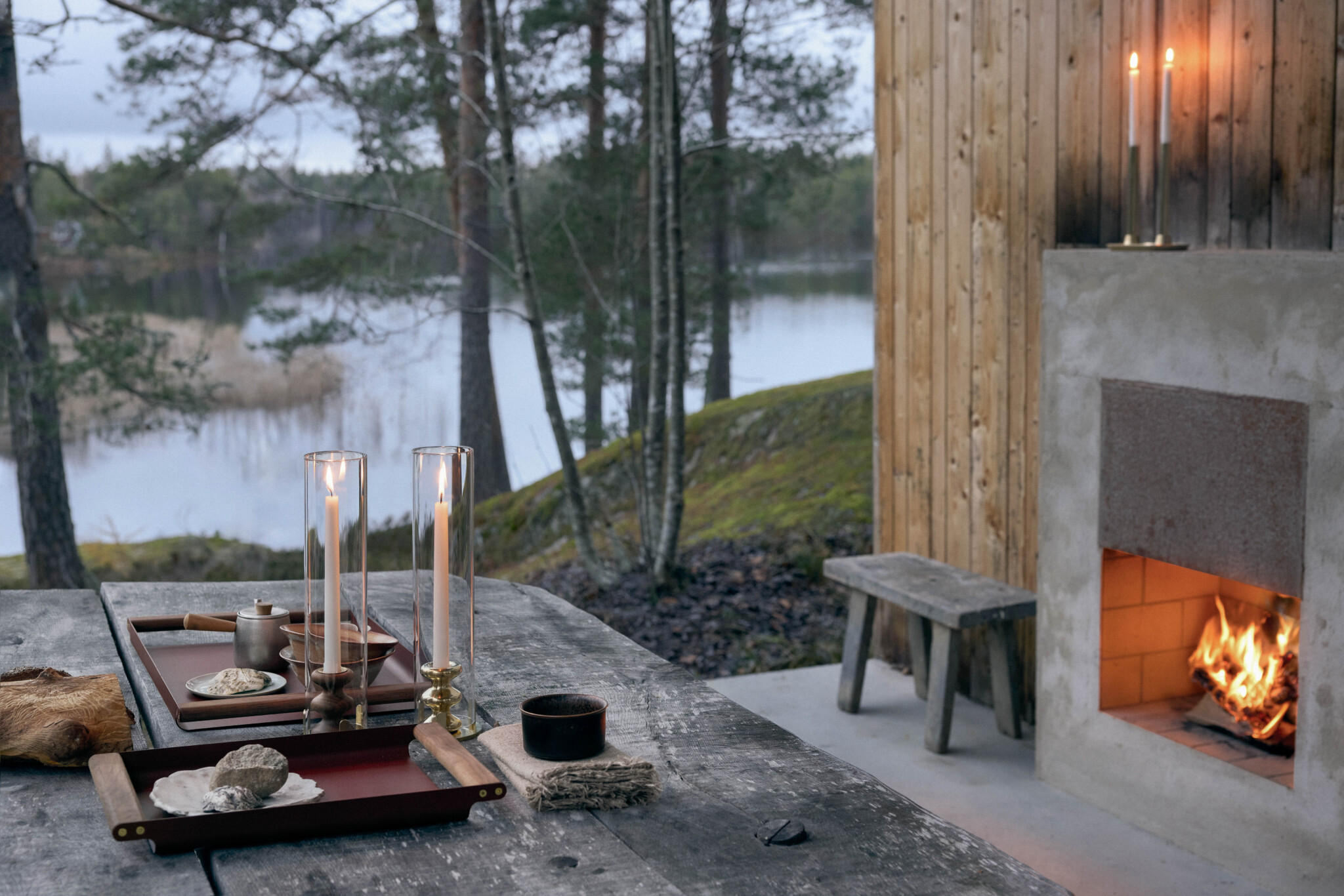
We talk about the difference between Scandinavia and Paris, where Louise currently lives. In Scandinavia, the fireplace is deeply functional, a real source of heat through winter. There are traditions around the quality of the burn, the flame itself, the intelligence of firewood, the skill of building a proper blaze. Fire is not decorative there. It belongs to weather, survival, season, discipline. Paris, she says, has a more romantic relationship with fire. In the old Haussmannian buildings, fireplaces were once present in every room, and many apartments still have them, even if they no longer work. The mantelpiece remains. The chimney breast remains. The idea of the fire remains. And even when no flame is ever lit, the room still behaves as if one might be. Furniture arranges itself around the ghost of warmth. Art is hung in relation to it. Flowers are placed there. Candles appear. People gather near it without entirely knowing why.
I find this deeply moving. A fireplace that no longer works, still teaching a room how to belong. Because a hearth is not only a source of heat. It is an organizing principle. It tells the room where its heart is. It creates a front, a focus, an axis of attention. Even empty, even cold, even sealed, it gives the room a memory of gathering. A mantelpiece is a kind of altar to domestic life. Photographs, matches, small bowls, postcards, shells, candlesticks, a stone from a beach, a child’s drawing, something inherited, something bought for no reason except that it seemed to want to come home with you. The mantel gathers fragments of self and family and travel and loss, then holds them above the place where warmth would be.
I love this idea. That belonging is not always produced by being asked questions. Sometimes it is produced by not being asked anything at all. There is a form of love that says, sit here, say nothing, warm yourself. Perhaps this is why the fire feels so different from other technologies of heat. A radiator warms the room. Underfloor heating comforts the feet. A furnace performs its hidden duty in the basement or behind a wall. But fire is visible care. It asks to be tended. It changes. It consumes. It glows and collapses and flares again. It makes maintenance beautiful. It reminds us that warmth is not a setting. It is a relationship. You cannot really automate a fire. Not the kind of fire we are talking about. You can make it easier, cleaner, safer, more efficient, but the essential thing remains participatory. Someone must arrange the wood. Someone must strike the match. Someone must notice when the flame is taking and when it is failing. Someone must open the door, move the log, clear the ash, wait, watch, begin again.
We talk about the difference between Scandinavia and Paris, where Louise currently lives. In Scandinavia, the fireplace is deeply functional, a real source of heat through winter. There are traditions around the quality of the burn, the flame itself, the intelligence of firewood, the skill of building a proper blaze. Fire is not decorative there. It belongs to weather, survival, season, discipline. Paris, she says, has a more romantic relationship with fire. In the old Haussmannian buildings, fireplaces were once present in every room, and many apartments still have them, even if they no longer work. The mantelpiece remains. The chimney breast remains. The idea of the fire remains. And even when no flame is ever lit, the room still behaves as if one might be. Furniturearranges itself around the ghost of warmth. Art is hung in relation to it. Flowers are placed there. Candles appear. People gather near it without entirely knowing why. I find this deeply moving. A fireplace that no longer works, still teaching a room how to belong. Because a hearth is not only a source of heat. It is an organizing principle. It tells the room where its heart is. It creates a front, a focus, an axis of attention. Even empty, even cold, even sealed, it gives the room a memory of gathering. A mantelpiece is a kind of altar to domestic life. Photographs, matches, small bowls, postcards, shells, candlesticks, a stone from a beach, a child’s drawing, something inherited, something bought for no reason except that it seemed to want to come home with you. The mantel gathers fragments of self and family and travel and loss, then holds them above the place where warmth would be.
Every home has these small altars, whether we call them that or not. The shelf by the door where keys accumulate. The kitchen windowsill with herbs and chipped mugs. The bedside table with books, glasses, lip balm, medicine, a phone turned face down in a rare act of defiance. The chair where clothes gather, waiting to become decisions. The corner where the morning light first arrives. The place where someone always sits, even when they are not there. But the hearth is the original one. The first altar. The first cinema. The first kitchen. The first theatre. The first chapel of the ordinary. It does not surprise me when Louise tells me she is considering making a home altar, a single candle set inside a modern folded dais. It is, of course, magnificent. Louise has a working fireplace in Paris, which she uses throughout winter. I imagine her there, in the city of stone façades and iron balconies, tending flame inside rooms designed by another century. Outside, scooters, sirens, wet pavements, winter coats, th smell of bread from a corner bakery, the blue hour settling over the zinc roofs. Inside, the old ritual continues. A match. A breath. The first small catch of flame. The luxury of warmth made visible. There is something beautiful about this continuity between Torekov and Paris. The Swedish garden room and the Haussmannian apartment. Summer night and winter evening. Childhood and motherhood. Grandfather andmaker. Coast and city. Past and present. The fire changes location, but not meaning. Belonging, perhaps, is not one place. It is the ritual that allows places to speak to one another.
She tells me about finding the right makers for Eldvarm, and how difficult it was in the beginning to understand the complexity of working across so many materials. Metal, wood, leather, bristles, stone, textiles, packaging, finishes, hands. Each material requires its own knowledge. Each object passes through different workshops, different skills, different kinds of patience. The Emma Companion set alone uses seven different materials, not including the packaging. It became a treasure hunt. The phrase stays with me. A treasure hunt. Not because it sounds easy, but because it sounds devoted. To make something properly is to go looking for the people who know what proper means. A fourth-generation brush-maker in France. Family-run workshops. Specialists with pride in the smallest things. Louise uses the Swedish word yrkesstolthet, the pride of one’s profession, the dedication to being the best at what you do. Our set is used every day, that patina of time and soot and dust building up, making it only more beautiful, more personal. It has our hands on it, our sooty fingerprints, our memories.There is belonging here too. Not the belonging of the family gathered around the finished fire, but the belonging of hands to materials, of makers to lineages, of knowledge passed from one generation to another through repetition, correction, touch. A brush is never only a brush if four generations of brush-making live inside it. A tool is never only a tool if it has passed through many hands before reaching yours. It carries with it a quiet social life. A whole invisible community of making. In a world obsessed with speed, there is something almost radical about an object that still contains slowness. You can feel it. Not always immediately, but eventually. The weight is right. The handle sits well in the hand. The brush does not feel like a prop, but like a companion. The materials have not been bullied into shape, but persuaded. Nothing is shouting. Nothing is trying too hard. The object simply knows what it is for.
Fire is also, of course, one of design’s oldest tools. Perhaps the oldest. Before it was metaphor, before it was atmosphere, before it was the golden centre of a room around which people gathered, it was a medium. A method. A way of changing matter from one state to another. Design has always understood fire as both danger and possibility. It smelts. It casts. It anneals. It tempers. It hardens and softens, blackens and brightens, destroys and reveals. To work with fire is to accept that making is not always a polite activity. It is not always a clean pencil line, a neat sketch, a smooth prototype, a tasteful mood board pinned to a wall. Sometimes making is heat. Sometimes it is pressure. Sometimes it is the controlled violence of transformation.
There is a whole language of fire that feels almost ceremonial when spoken aloud. Smelting. Casting. Firing. Soldering. W elding. Blowing. T empering. Kilning. Annealing.Each word carries the sound of a workshop, a furnace, a hand held close to something too hot to touch. Glassblowing is breath and flame made visible. W elding is a kind of electric seam, a scar that joins. Ceramics pass through the kiln and emerge no longer earth, but vessel. Metal enters the furnace as ore or scrap and returns as tool, bell, blade, hinge, spoon, sculpture. Fire does not merely decorate the material. It alters its nature. I think often of Shou Sugi Ban, the Japanese practice of charring wood to preserve it. On the face of it, the gesture seems almost paradoxical. To protect the wood, you burn it. To make it more durable, you submit it to flame. The surface blackens, silvers, cracks into a texture like reptile skin or old night. It becomes more itself by passing through its apparent opposite. What looks like damage is, in fact, a form of care. What looks like ending is preparation for endurance.
That feels very close to design at its best. Not design as styling, not design as polish, not design as the anxious smoothing away of life’s irregularities, but design astransformation. Design as the intelligent application of heat. Enough pressure to change something. Enough restraint not to ruin it. The designer, like the firekeeper, has to learn the difficult art of judgment. When to stoke. When to withdraw. When to let something rest. When to let it cool. When the material is ready to be shaped, and when it must simply be left alone. There is a wild poetry in this, but also a responsibility. Fire is never neutral. It asks to be respected, not merely admired. It can gather people, feed people, warm people, make people feel held in the dark. It can also consume, scar, erase. T o bring fire into design is to enter into an agreement with something older and stronger than oneself. You do not command it entirely. Y ou collaborate with it. Y ou tame it, perhaps, but only partially. Its primal nature remains, flickering at the edge of every useful flame.
There is a wild poetry in this, but also a responsibility. Fire is never neutral. It asks to be respected, not merely admired. It can gather people, feed people, warm people, make people feel held in the dark. It can also consume, scar, erase. To bring fire into design is to enter into an agreement with something older and stronger than oneself. You do not command it entirely. You collaborate with it. You tame it, perhaps, but only partially. Its primal nature remains, flickering at the edge of every useful flame.
And perhaps that is why fire still speaks to us so deeply. It is not only symbolic. It is practical magic. It takes the raw and makes it usable. It takes the brittle and makes it resilient. It takes separation and makes a join. It takes matter and gives it memory. Every fired pot, every forged knife, every welded frame, every blown glass vessel, every blackened plank of cedar carries in it the story of heat passing through material. A record of transformation. A little proof that change, when held carefully enough, can become strength.
Louise writes:
After six years of obsessing about this and reading every book I could find, I knew my direction, but I was not yet able to put it into words. In my conversations with Paul, especially during the couple of days spent together at his home in Denmark, he helped me find it within me. Paul and I sat by the fire, as our ancestors did before us, and I told him my findings. I heard his feedback, his questions, and his critique, and we had that wonderful endless loop of back and forth to really get to my why. From grief and Joshua Tree through fire, Denmark, and Paul, I can now, for the first time, put my purpose into words. I think of all the fires I have sat beside. Some real, some metaphorical. Fires in holiday houses where everyone stayed up too late. Fires in restaurants that made strangers feelbriefly like conspirators. Fires in hotel lobbies after long journeys, when the sight of flame made the body believe it had arrived somewhere merciful. Fires in friend’s houses, where the conversation thinned into contentment and nobody rushed to fill the space. Fires outdoors, smoky and unruly, where clothes kept the scent for days afterward, as if memory had entered the fabric. And I think too of those other hearths. The kitchen table. The studio. The workshop. The pub booth. The place in an office where people gathered when no one had asked them to. The bench in a park where the same older men appear every morning. The coffee shop corner that becomes yours by repetition. The group chat that, against all odds, becomes a small source of warmth. We are endlessly making fires, even when there is no flame. We are forever looking for the place where we can draw nearer and rest. Because belonging is not simply being included. Inclusion can be administrative. Belonging is atmospheric. It has temperature. Texture. Smell. Sound. It has the scrape of a chair being pulled closer, the softness of someone saying stay a little longer, the knowledge that you can leave the room and return without losing your place in it. It is being known without being examined. Held without being gripped. Warmed without being consumed. Fire understands this better than almost anything. It does not interrogate. It does not demand biography. It does not care where you have been, only that you are cold now and might like to sit closer. It gives without asking to be thanked, though it does ask to be tended. It creates a commons out of darkness. It makes a circle and says, here.

Louise says that what makes people gather and stay finally comes down not to the objects, beautiful as they may be, but to the people you are with. Of course she is right.
The tool is not the fire. The fire is not the family. The room is not the belonging. But each helps the other appear. The object supports the ritual. The ritual supports the gathering. The gathering supports the feeling. The feeling becomes memory. The memory calls us back. This is the ecology of home. Not one thing, but many things in relation. Flame, chair, blanket, tool, hand, story, season, child, elder, absence, return.The grandfather tending the fire. The child falling asleep on the sofa. The adult child returning with children of her own. The maker shaping the brush. The room in Paris still arranging itself around a fireplace that may or may not burn. The body calming in the flicker. The nervous system remembering something older than thought.
Louise writes:
For nearly half a million years, our brain perfected itself to the architecture of togetherness. I want to spend the next part of my life dedicated to how we can create belonging and thereby heal ourselves and each other. I am starting with the exhibition I Belong, by Eldvarm, at the upcoming 3daysofdesign event in Copenhagen this June, where we will explore the different activities we did by the fire every night and how they can help us today. And then, eventually, the fire lowers. This may be my favourite part. Not the blaze, but the embering. The room darker now. Voices slower. The logs having surrendered their architecture. The red at the centre still alive, but inward. No longer performing fire, simply being it. Someone says they should go to bed. No one moves. Someone shifts under a blanket. Someone pokes the ash and a brief constellation appears. For a moment, the whole room glows again. Perhaps belonging is like that. Not a permanent flame, not something that roars endlessly without care or fuel, but something we tend in small repeated ways. Something we inherit and remake. Something that needs air,attention, patience, and the willingness to sit together through the dimming as well as the blaze.
Before we belonged to houses, perhaps we belonged to fire.
And perhaps we still do.
We, Belong
Meet Louise:
Louise Varre grew up in Sweden and Norway, and has spent as many years outside Scandinavia as in it, bringing both deep roots and a broad international perspective to the brand.
Fire has been a constant. A childhood surrounded by fireplaces, then nearly two decades with the fireplace at the heart of her work. Alongside, a lifelong fascination with psychology, neuroscience and evolution. In recent years, her interest has deepened into how the fire shaped humanity. For Louise, I Belong is a deeply personal exhibition, it is the first time her two passions come together, expressed as one.
Louise lives in Paris with her two sons.