I, Wonder
I see trees of green, red roses too. I watch them bloom, for me and you.
Wonder begins there, not as a conclusion, but as an intake of breath.
Before it is an idea, wonder is a physical event: the slight widening of the eyes, the pause mid-step, the subtle realignment of the body toward something it did not expect. Awe arrives like weather. Curiosity behaves more like a tide. One descends upon us; the other draws us out. Both require the same opening gesture: attention.
When I was young, my father understood this without theory. If something quietly magnificent appeared, a sudden view, a moment of grace, a kindness that surprised the day, he would interrupt us. He would ask us to snap our eyes shut and open again, deliberately, like the shutter of a camera. Click, he would say. Then, softly but with intention: “Remember to remember.”
It was not sentiment he was teaching. It was method.
That small ritual carried an unspoken truth: wonder does not preserve itself. Beauty appears freely, but it does not linger unless invited. The world offers moments of awe generously, but it does not archive them on our behalf. Memory, my father seemed to know, is not passive storage. It is an act. A choice. A form of care. One of the things I find myself being asked again and again in the Q&A section of my talks is: “What is your process of remembering all this stuff? This is the answer: I remember to remember.
Wonder, in this sense, is incomplete without remembrance. Awe strikes, but memory gives it duration. Curiosity ignites, but memory gives it direction. To remember to remember is to acknowledge that meaning is fragile, that without attention, even the most luminous moments evaporate back into the ordinary.
The trouble with adulthood is not that it lacks beauty, but that it becomes efficient at looking past it. We learn to file things away. Tree. Sky. Face. Street. We replace encounter with category. The miraculous becomes familiar, and familiarity dulls, not because the world has grown smaller, but because our noticing has. Wonder is what happens when attention re-inflates. Memory is how it stays inflated.
Awe is the cathedral form of wonder. It is scale and silence, the sensation of standing before something that does not require you. Mountains practice it daily. So do storms, newborns, eclipses, and certain pieces of music that arrive already knowing you. Awe humbles without humiliating. It does not say you are insignificant; it says you are not alone at the center of things. In a culture addicted to control, awe is quietly subversive. My partner Jim and I moved to Iceland because we needed to be untethered, unmoored, and reminded of our own scale. We were looking, though we may not have known it at the time, to be humbled by the world itself. One night, on the way home, the sky seemed to abandon restraint. An erupting volcano lit the horizon from below, the dark mass of a mountain rose beside the road, and above us the aurora moved like a slow, deliberate thought. Awe does not quite cover it. Some moments do not astonish so much as rearrange you.
Curiosity is wonder with its sleeves rolled up. If awe says behold, curiosity asks why, or better still, what if. It is smaller in scale but longer in reach. Curiosity is what makes a child dismantle a clock, not to break time, but to see how it moves. It is what draws us into tide pools, footnotes, attics, marginalia, and the expressions on other people’s faces. You cannot be curious about someone and reduce them at the same time.
Where awe dissolves the ego, curiosity animates it. One empties; the other fills. Together they form a circuit, stunned into stillness, then stirred into motion. Wonder lives in the oscillation.
Childhood is not remembered for its innocence so much as for its immersion. Nothing was background. A puddle was not a failed sidewalk but a portal. A stick was not wood but possibility. Time did not pass; it expanded. Days were not managed; they unfolded. Children do not ask questions to be clever. They ask because the world has not yet hardened into explanation. I long for the days when I could run forever, see stories in shadows, say what I felt, feel what I saw.
What we lose with age is not imagination, but permission. We are trained, gently and relentlessly, to hurry, to justify, to produce. Lingering becomes suspect. Not-knowing becomes a flaw. Delight must earn its keep. Curiosity is tolerated only when it becomes useful. Awe is permitted, but mostly on vacation and trapped in the cage of social media.
And yet the old circuitry never disappears. You can feel it reawaken in unscripted moments: a child’s unexpected sentence, the sudden hush after snowfall, the way a smell dismantles decades and returns you to a kitchen, a street, a person you thought you had finished missing. Wonder waits patiently for our defences to tire.
Science, often miscast as wonder’s antagonist, is in fact its most disciplined expression. At its best, science is curiosity trained to endure. It is the long gaze. The refusal to turn mystery into decoration or dogma. Every meaningful discovery begins not with certainty, but with a question that refuses to be ignored.

The danger is not explanation, but arrogance. When understanding becomes conquest, awe collapses into control. But when science remains tethered to astonishment, to the sheer improbability of existence, to the elegance of patterns we did not design, it enlarges wonder rather than shrinking it. The universe does not merely function; it composes. To study it carefully is not to demystify it, but to stand longer in its presence.
In an age increasingly shaped by machine-led thinking, by systems designed to optimize, predict, and decide at speeds that outpace reflection, wonder becomes more than a pleasure. It becomes ballast. Awe reminds us of what resists reduction. Curiosity keeps asking questions that refuse to justify themselves. Together, they ask something quieter and more urgent of us, not that we think faster or smarter, but that we remember to remember what it feels like to be human while thinking at all.
Faith, too, survives only where wonder is allowed to breathe.
Without awe, faith hardens into assertion. Without curiosity, it calcifies. The healthiest expressions of belief are not those that claim certainty, but those that cultivate reverence, an acceptance that some truths exceed articulation. Awe is faith’s native grammar. It kneels not out of submission, but out of scale.
Curiosity within faith keeps belief alive rather than embalmed. It allows doubt to function not as betrayal, but as inquiry. It asks not only what do I believe, but what does this belief make me notice, or ignore. Without curiosity, faith shrinks the world. With it, faith enlarges it.
Design, my own long apprenticeship, sits at the intersection of these forces. Design begins in curiosity: watching how people live, where friction hides, what is missing but unnamed. It demands humility, because the problem you think you are solving is rarely the real one.
But good design also depends on awe, specifically awe at human complexity. At contradiction. At the fragile choreography of needs, fears, hopes, and habits. To design without wonder is to optimize without mercy. To design with wonder is to treat solutions as provisional, generous, and capable of learning.
Memory, meanwhile, is wonder’s most intimate collaborator.
Memory does not preserve events; it preserves resonance. The past survives not as chronology, but as constellation. Certain moments glow brighter not because they were extraordinary, but because we were fully present within them. Wonder sharpens memory. It increases resolution.
This is why remembering to remember matters more as we age. Not as nostalgia, but as continuity. Curiosity keeps the future porous. Awe keeps the present luminous. Memory stitches them together.
We tend to think of wonder as fragile, easily lost. But perhaps it is more accurate to say it is renewable, provided we practice. Provided we interrupt ourselves long enough to mark the moment. Click. This mattered.
And so we return, quietly, to song.
And I think to myself…
Not I conclude. Not I measure. But I think to myself. A private reckoning. A gentle astonishment. The world is wonderful not because it behaves, but because it persists. Trees keep greening. Roses keep reddening. Babies keep learning the difficult work of being human. Friends keep reaching out their hands.
To say the world is wonderful without irony is not denial. It is defiance. It is choosing attention over cynicism. It is understanding that wonder is not the opposite of seriousness, but its foundation. Awe teaches humility. Curiosity teaches care. Memory teaches us to keep faith with what moved us.
Wonder does not ask us to escape the world. It asks us to meet it, again and again, as if it might still surprise us.
And astonishingly, it does.
by Léa Morel, MOCAYA Art
In the world of Curiosity Chronicles, we often seek that tipping point where reality surpasses fiction. The work of visual artist Thomas Blanchard is the very embodiment of this threshold. Through his macroscopic explorations, he does more than just film paint or oil; he captures the poetry of an organized chaos, creating an immediate sense of awe in the viewer.
But before it dazzles us, the wonder is first felt by the artist himself. For Thomas, every creation is an adventure without a compass: his art is not an exact science, but a permanent experimentation. By venturing down paths where the outcome is unknown, he allows the matter itself to surprise him. Therefore, Thomas does not simply manufacture images; he watches them come to life. In a sense, he remains a spectator of his own art, fascinated by the emergence of unusual and unpredictable visuals that arise at the tip of his lens.
It is in this surrender to the unforeseen that he regularly finds himself seized with wonder at a chemical reaction he hadn’t imagined, or a form born against all expectations. His work is not merely the result of a technique; it is the sincere sharing of a chance discovery.
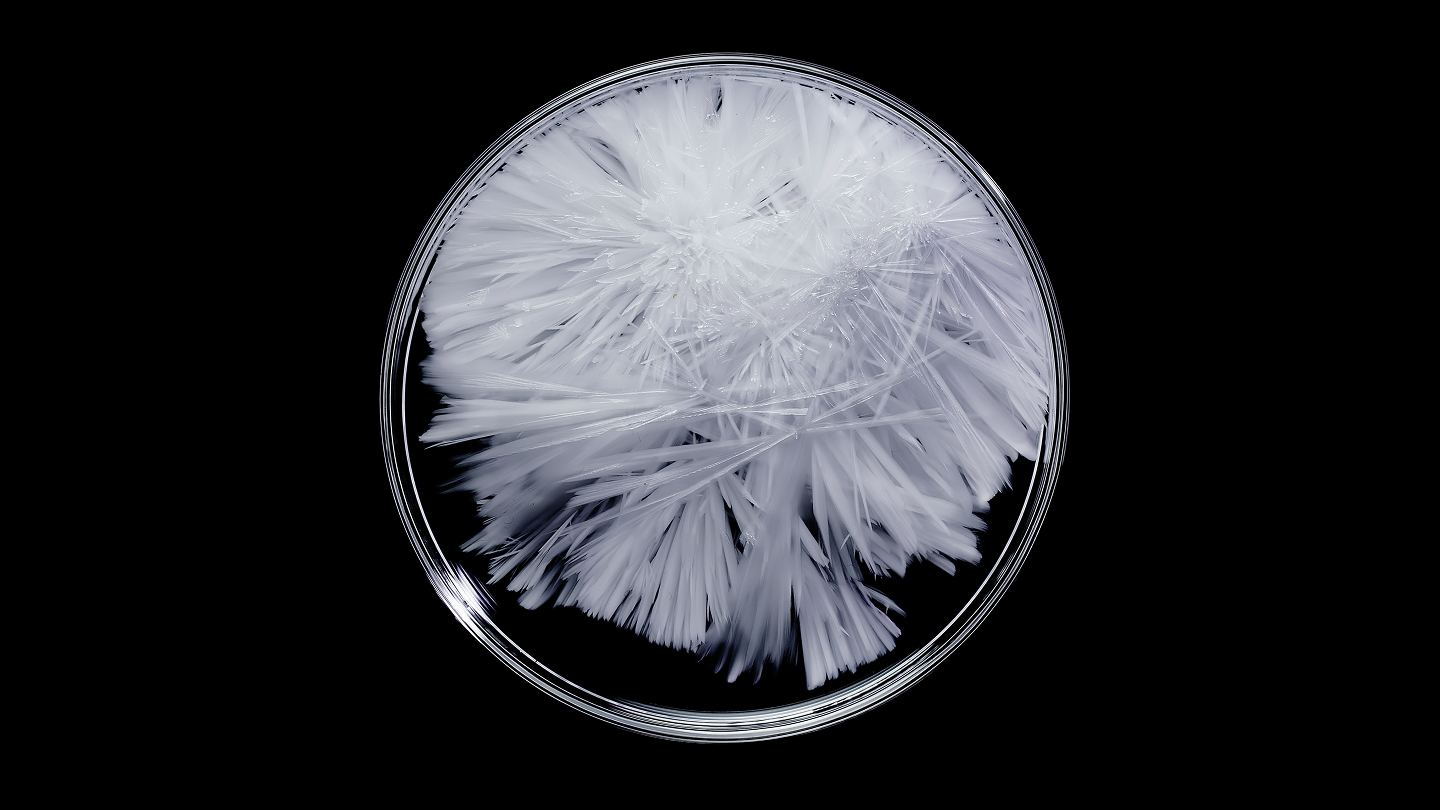
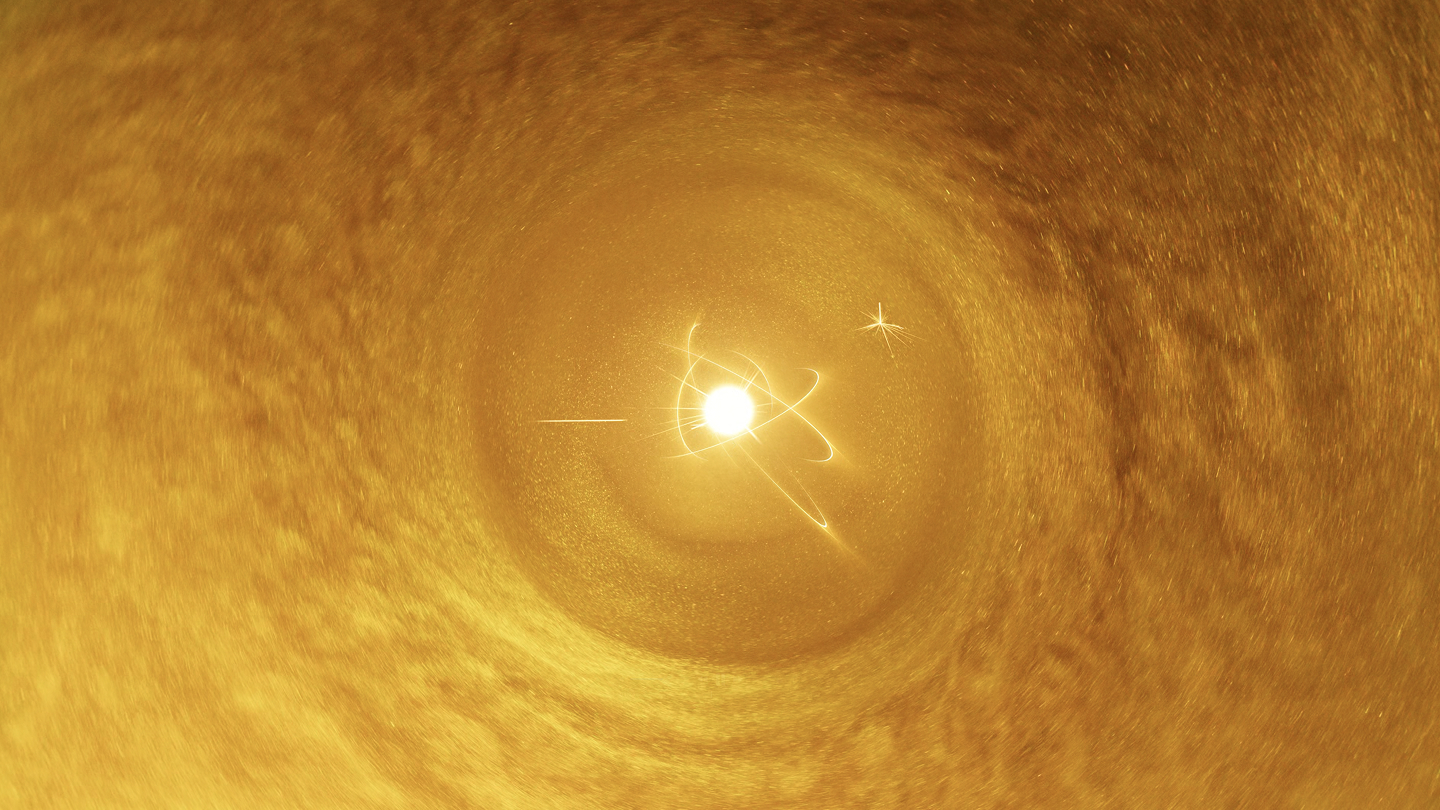
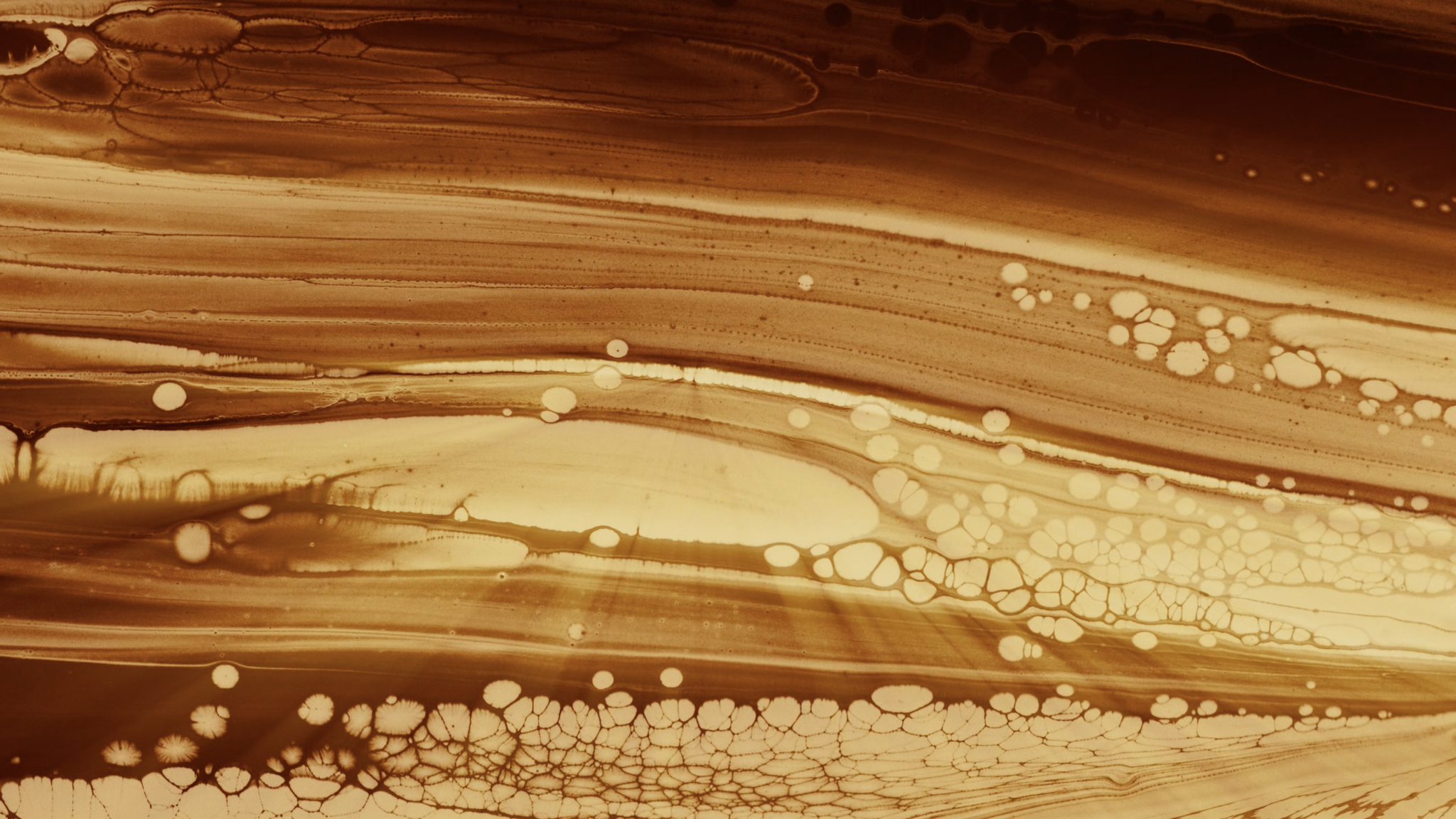
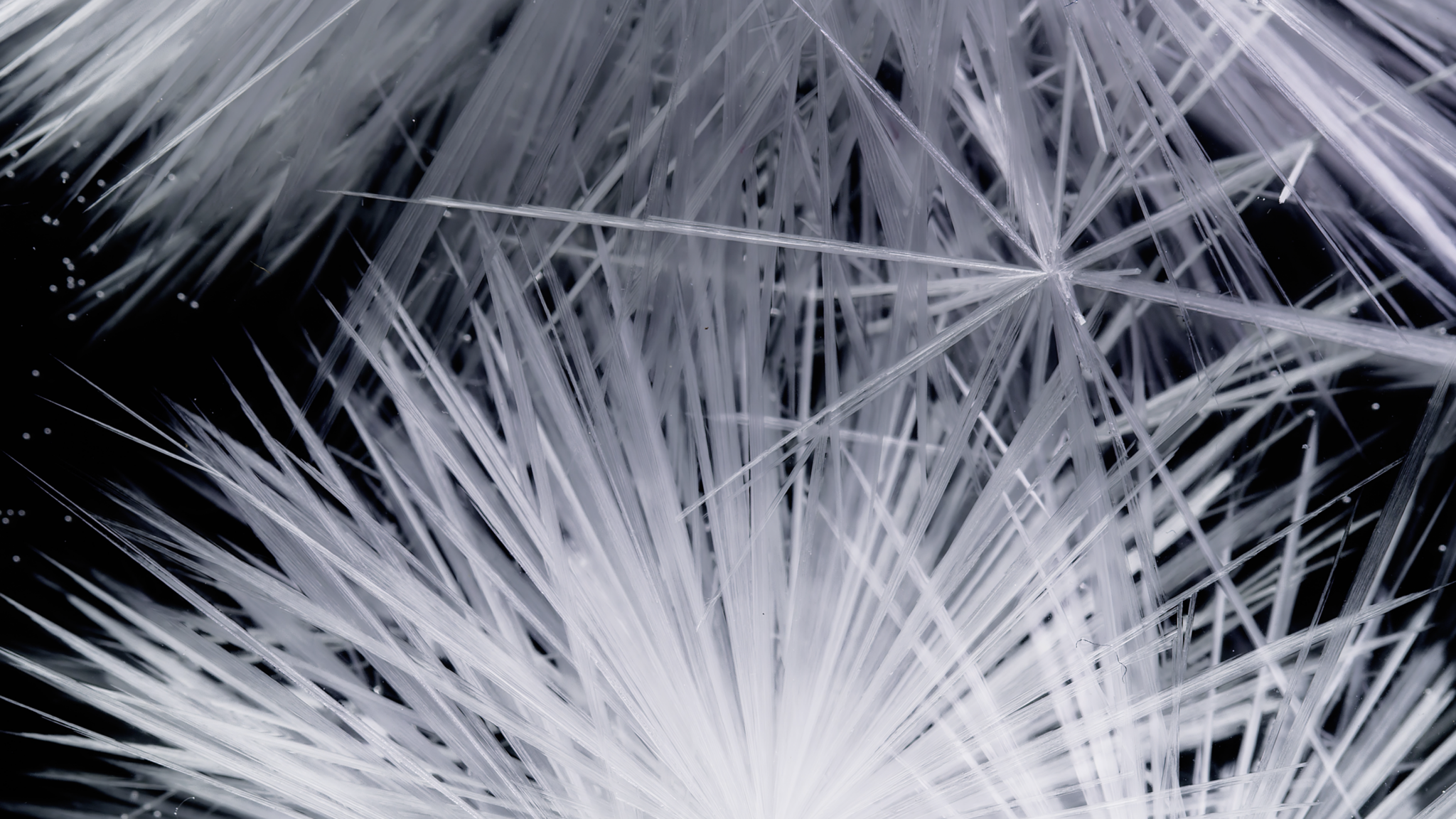
Wonder is often born from a confrontation with the unknown. Thomas uses technology (8K cameras, macro lenses) to plunge us into a world that exists right before our eyes, yet which our senses are unable to perceive without help. By slowing down fleeting chemical reactions, he transforms a simple drop of ink into a galactic nebula. This shift in temporal scale forces our minds to stop and contemplate. He gives us a sense of suspended time which, more often than not, leaves us in awe.
Find his art here : https://vimeo.com/thomasblanchard and https://www.instagram.com/thomas__blanchard/